Vote Nevada supporters,
I want to share a brief update on the legislative session’s timeline and confirm Vote Nevada will offer Zoom training on using the legislature’s website and tips for effective legislative advocacy.
Additionally, we are offering a new engagement opportunity this legislative session. Every community member needs to be heard, so Vote Nevada is sponsoring a Nonpartisan Caucus with a good governance approach for evaluating bills and budgets. The Caucus will broadly focus on improving institutions, systems, and processes.
Everyone who values issue advocacy is welcome to participate.
Here’s the legislative timeline:
The Economic Forum reviewed Nevada’s revenue sources on December 3rd to project the funding available for the governor’s biennial budget. The Forum projected a 12% increase over the last budget. You can read more here: https://nevadacurrent.com/2024/12/03/nevada-economic-forum-makes-conservative-state-revenue-estimates-for-next-biennium/
The governor’s staff is building his budget to present to legislators when the session starts on February 3rd. On January 15th, the Governor will present his priorities to us through his State of the State address.
You can watch the Economic Forum’s recorded hearing and review the Economic Forum’s documents here: https://www.leg.state.nv.us/App/InterimCommittee/REL/Interim2023/Committee/1973/Meetings
There are 971 Bill Draft Requests and 166 bills with complete language currently available through NELIS. Legislators submit bill draft requests as markers for future bills. You can review the BDRs and bills,
Here for BDRs https://www.leg.state.nv.us/App/NELIS/REL/83rd2025/Bdrs/List
Here for Bills https://www.leg.state.nv.us/App/NELIS/REL/83rd2025/Bills/List
The Interim Finance Committee meets during the week of January 27th to hear state agency budget requests, and the regular session starts on February 3rd.
You can track upcoming events and hearings on the Scheduled Meetings page of the legislature’s website: https://www.leg.state.nv.us/App/Calendar/A/
Vote Nevada is hosting and co-sponsoring the following events in January:
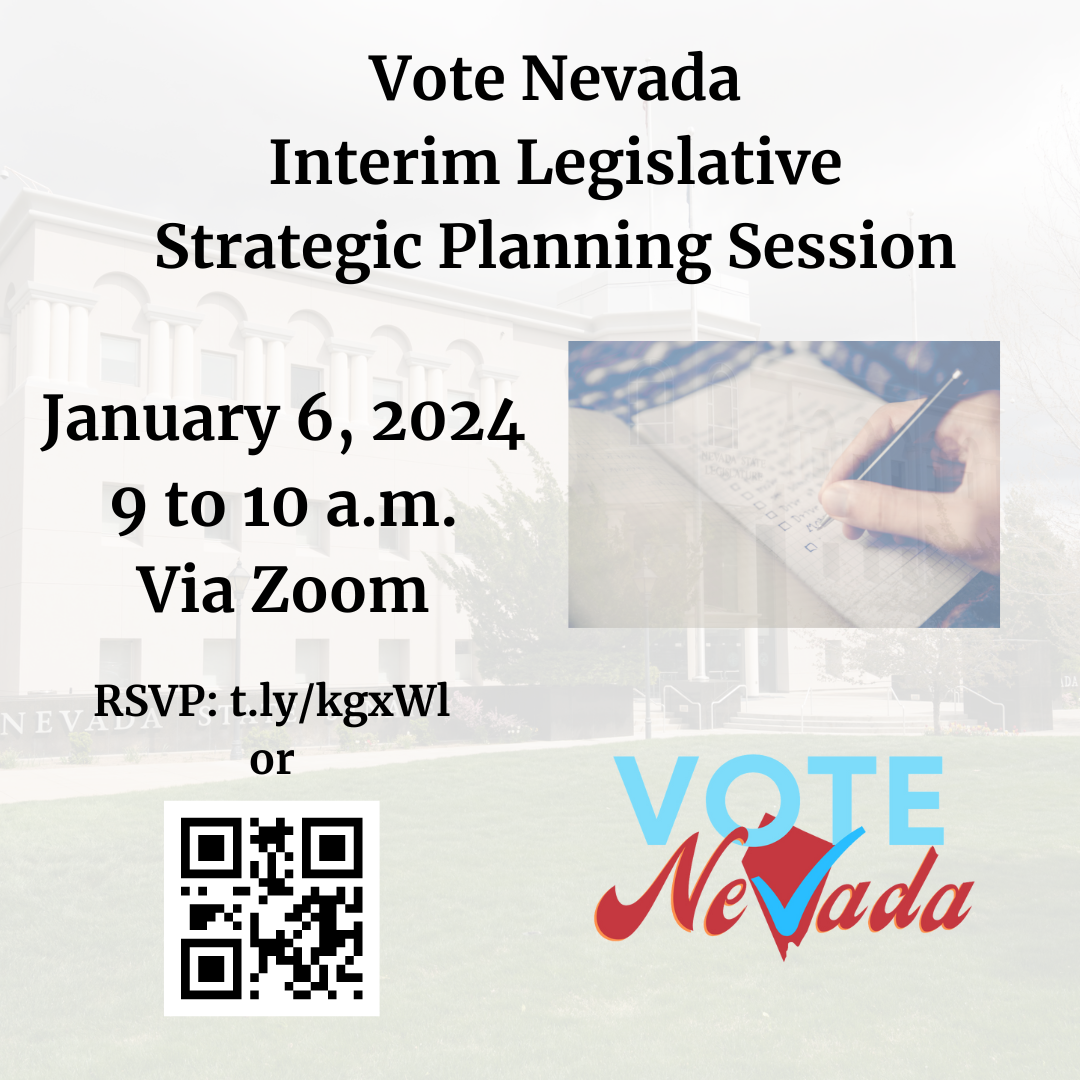
Saturday, January 4th: Vote Nevada’s Nonpartisan Legislative Caucus Discussion
RSVP: t.ly/awiKb

Saturday, January 10th: Legislative Advocacy 101
RSVP: t.ly/dxNG1

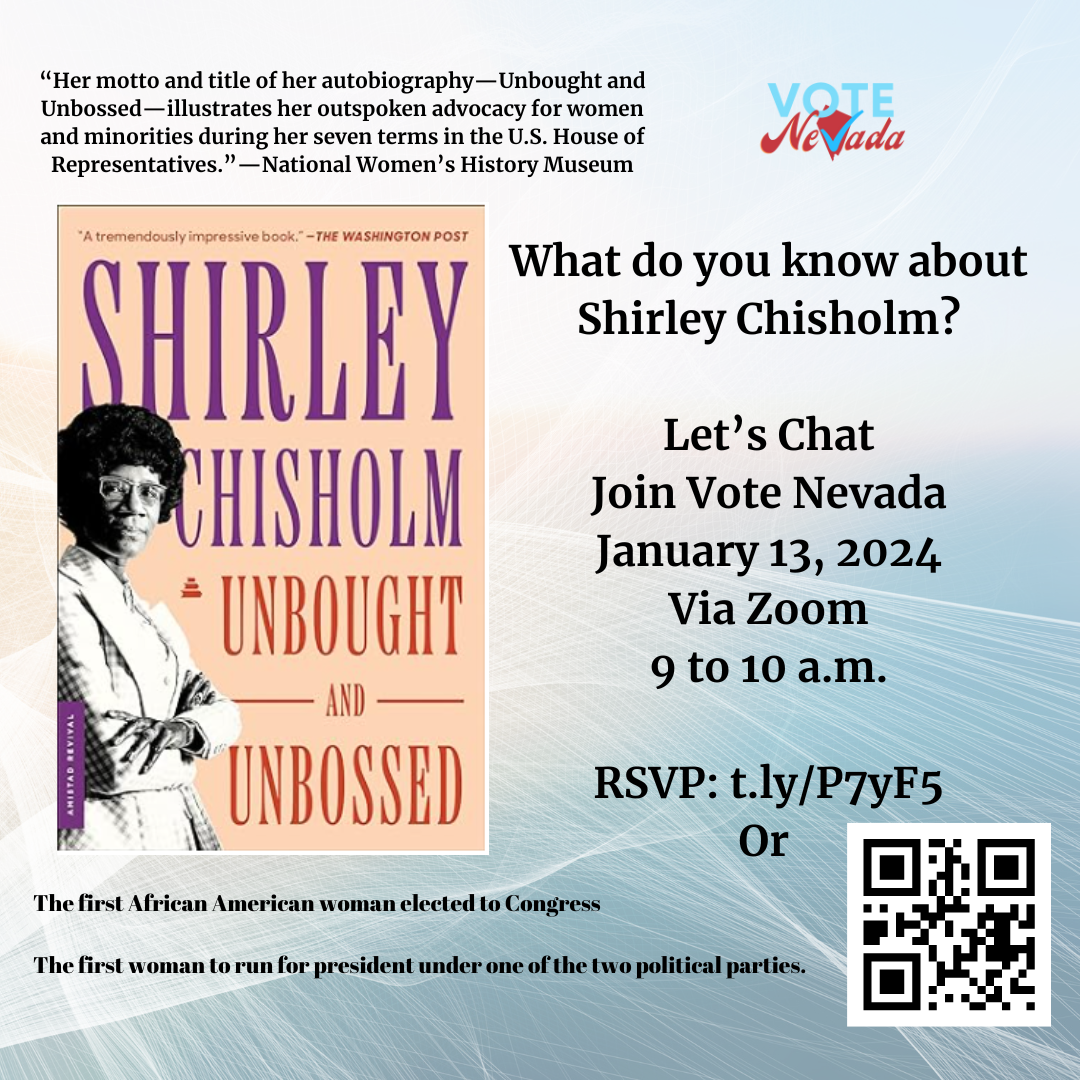
Saturday, January 11th: Black Women and Civic Engagement

Thank you for being Nevadans with me,
Sondra
Vote Nevada is now qualified to receive donations through
Smith’s Inspiring Donations; you can read more about how to donate to Vote
Nevada each time you use your Smith’s loyalty card here: https://www.smithsfoodanddrug.com/i/community/smiths-inspiring-donations
Vote Nevada is a 501(c)(3) nonprofit civic engagement
organization. Anyone can become a supporter by emailing info@vote-nevada.org;
we have no membership dues. You can now donate to Vote Nevada through
PayPal at https://www.paypal.com/donate/?hosted_button_id=L423L7FBMMBEA


 Vote Nevada